Concrete Driveways in Hickory, NC
New driveways, replacements, and resurfacing across Hickory and the NC Foothills — poured at the correct thickness over a properly compacted base so your driveway looks great and lasts for decades.
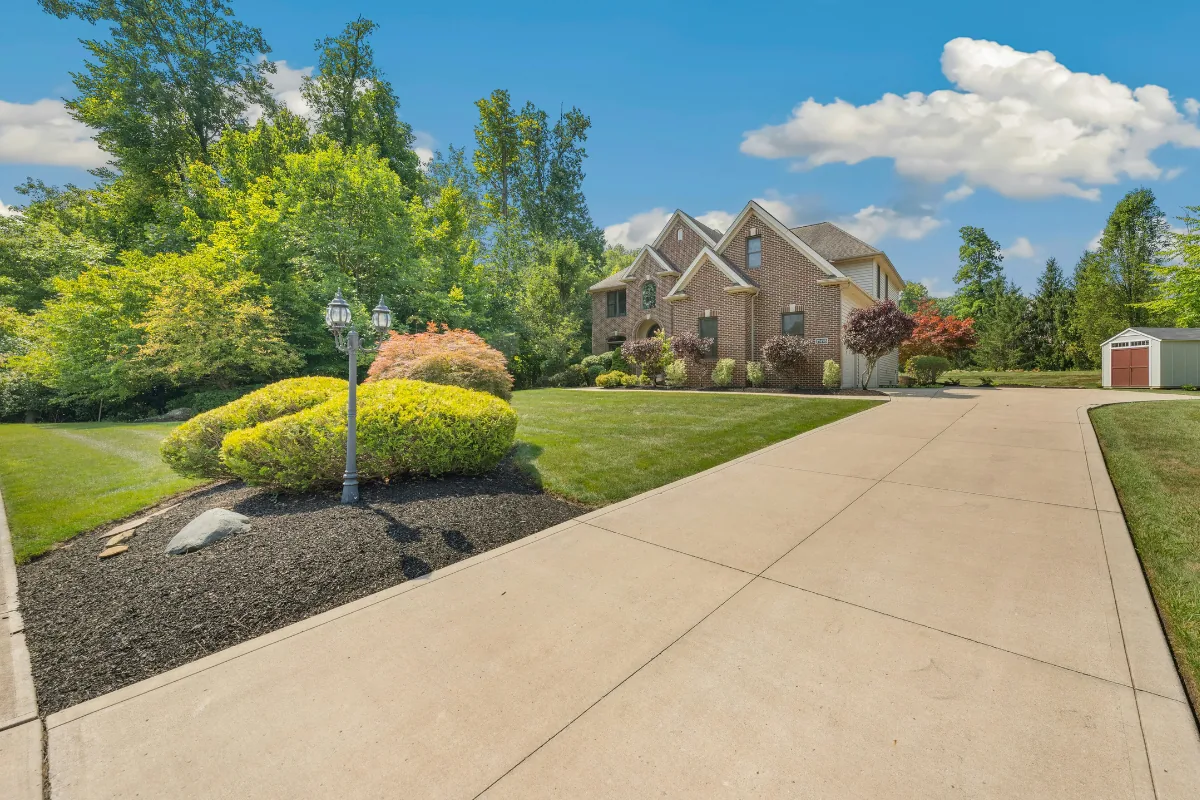
Driveways Built for the Foothills
Your driveway is one of the first things people see — and one of the hardest-working surfaces on your property. The Foothills Concrete Company installs and replaces concrete driveways throughout Hickory, Conover, Newton, Lenoir, Morganton, and the surrounding counties, with the prep and finishing work that makes the difference between a driveway that lasts 30+ years and one that's cracking within a few winters.
We know how Foothills conditions — clay soils, sloped lots, and freeze-thaw cycles — affect a driveway, and we build for them from the base up.
What We Install
- New driveway installation — full design, forming, and pour for new construction or first-time concrete.
- Driveway replacement — tear-out and removal of failing concrete or asphalt, then a fresh, properly based pour.
- Decorative & stamped driveways — broom, smooth, exposed-aggregate, and stamped finishes in a range of colors and patterns.
- Widening & extensions — add parking, turnarounds, or aprons to your existing driveway.
- Aprons & approaches — the transition from street to driveway, poured to code.
Why Proper Base Prep Matters Here
Most driveway failures don't start at the surface — they start underneath. The Foothills' clay-heavy soils hold water, and water that freezes and thaws under a slab will heave and crack it. We excavate to the right depth, install and compact a proper gravel base, set reinforcement, and cut control joints at correct spacing so your driveway resists cracking through every North Carolina winter. A driveway is only as good as what's under it.
How Much Does a Concrete Driveway Cost?
In the Hickory area, a standard broom-finished concrete driveway typically runs $8–$15 per square foot installed, while stamped or decorative driveways generally run $14–$22 per square foot. A typical two-car driveway of about 600 square feet ranges from roughly $5,000 to $9,000 depending on site prep, slope, drainage, removal of old material, and finish. We provide a free, detailed written estimate so you know your exact price before any work begins.
How We Build a Driveway
1. Layout and excavation
We stake the shape with you before anything moves, so you can see the actual width and turning room rather than a number on paper. Then we strip topsoil and organics down to firm subgrade. Topsoil holds water and compresses; concrete poured on it will settle no matter how good the mix is.
2. Base and compaction
We bring in crushed stone and compact it in lifts. This is the step most often skipped, and it is the one that decides whether you get fifteen years or forty. A compacted stone base spreads vehicle load, and just as importantly it drains, keeping water out from under the slab where freeze-thaw does its damage.
3. Forming, reinforcement and grade
Forms are set to a deliberate fall so water leaves the driveway rather than sitting on it or running toward your garage. Rebar or wire mesh goes in for anything carrying more than passenger cars. Reinforcement does not stop concrete cracking; it holds the pieces in plane when it does, which is the difference between a hairline you never notice and a lip you trip on.
4. Pour, finish and joints
We place, screed, float and finish to the texture you chose, then cut control joints on a spacing matched to the slab thickness and within the right window after the pour. Joints are how you decide where the cracks go. Cut them late or too shallow and the slab decides for you.
5. Curing and handover
We walk the finished driveway with you, explain the curing schedule, and leave the site clean. Keep vehicles off for 7 days and heavy vehicles or an RV off for 28.
For the full picture, see how long a concrete driveway should last in North Carolina and what shortens it.
Why Driveways Fail Early in the Foothills
Almost every failed driveway we tear out failed for one of four reasons, and none of them are the concrete itself.
No base. Poured straight onto Catawba County clay. The clay swells wet, shrinks dry, heaves frozen, and voids open under the slab until it breaks over them.
Too thin for the load. Four inches is right for cars. It is not right for a work truck, a loaded trailer, or an RV, and no amount of surface sealer fixes an under-thick slab.
Water in the wrong place. A drive that pitches toward the garage, or lets runoff pond along one edge, is quietly washing out its own base every time it rains.
Joints cut wrong. Too few, too shallow, or too late, and you get random cracking across the field within a couple of seasons.
Finish Options
Broom finish is the standard and the most economical: good grip when wet, easy to keep, and it suits almost any house. Stamped or decorative borders and full fields give you stone, slate or brick looks and real curb appeal at a higher cost. Exposed aggregate sits between the two, with excellent traction on a grade. We bring samples to the estimate so you are choosing from something real rather than a photo.
The Foothills Way vs. The Other Guys
Not all concrete work is the same. Here's how we approach a concrete driveway installation compared to the cut-corner crews that leave homeowners with cracked, failing concrete a few winters later.
| What Matters | The Foothills Concrete Company | The Other Guys |
|---|---|---|
| Base preparation | Properly excavated & compacted gravel base | Pour over loose or uneven dirt |
| Thickness & reinforcement | Poured to load with rebar or wire mesh | Thin pours, skipped reinforcement |
| Drainage & slope | Graded to move water away | Water pools & undermines the slab |
| Control joints | Cut at proper spacing to control cracking | Too few or none — random cracks |
| Pricing | Written, transparent, no surprises | Vague quotes, add-ons at the end |
| Accountability | Local, licensed, insured & here to stay | Out-of-town, hard to reach later |
Our Concrete Confidence Package
Every project we take on comes with the same commitment — what we call our Concrete Confidence Package. It's our promise that you'll know exactly what to expect before we ever break ground:
- Clear expectations up front — a written scope of work, finish options, and timeline before we start, so there are no surprises.
- Locked-in pricing — the number on your written estimate is the number you pay. No mid-project add-ons.
- Workmanship you can count on — we stand behind every pour and back our work, because our name and reputation in the Foothills depend on it.
- Honest, faith-driven service — as a Christian-owned company, we treat your property and your budget with respect from the first call to the final walkthrough.
Frequently Asked Questions
For standard passenger vehicles, a residential driveway should be at least 4 inches thick over a compacted gravel base. If you'll park heavier vehicles, RVs, or trailers, we recommend 5–6 inches with rebar or wire mesh reinforcement. We pour to the right thickness for your specific use and soil conditions.
Wait at least 7 days before driving passenger vehicles on a new concrete driveway, and 28 days before parking heavy vehicles or RVs. You can usually walk on it after 24–48 hours. We provide complete curing instructions with every pour.
Yes. We can replace damaged sections, but because new and old concrete cure and settle differently, we'll give you an honest assessment of whether a section repair or full replacement is the better long-term value for your situation.
Yes. We handle tear-out and removal of your existing concrete or asphalt driveway as part of a replacement project, and we leave the site clean.
Most residential driveways take three to five working days from excavation to finish, depending on size, tear-out, and how much grading and drainage the site needs. Weather can extend that, since we will not pour into conditions that compromise the cure.
Yes, and it is common work here. A sloped driveway needs deliberate drainage design, sometimes a retaining wall at the edge to hold the grade, and often a broom or exposed-aggregate finish for traction. We assess the grade on site and price the drainage as part of the job rather than as a surprise later.
Spring and autumn are ideal, but we pour year round. In summer heat we start early and use curing measures so the surface does not flash off before it sets; in cold weather we watch overnight temperatures closely, because concrete that freezes in the first days never reaches full strength.
It depends on your municipality and whether the work touches the public right of way or changes a driveway apron. We know the requirements across the counties we serve and will tell you at the estimate whether a permit applies to your project.
Driveway work is the largest share of our residential concrete installation, and we take the same approach on every one: build the base for the load, reinforce it properly, and joint it so the slab cracks where we choose.
Concrete Driveways by Town
Every town we serve brings its own ground conditions. These pages cover what changes locally:
Recent Driveway Work
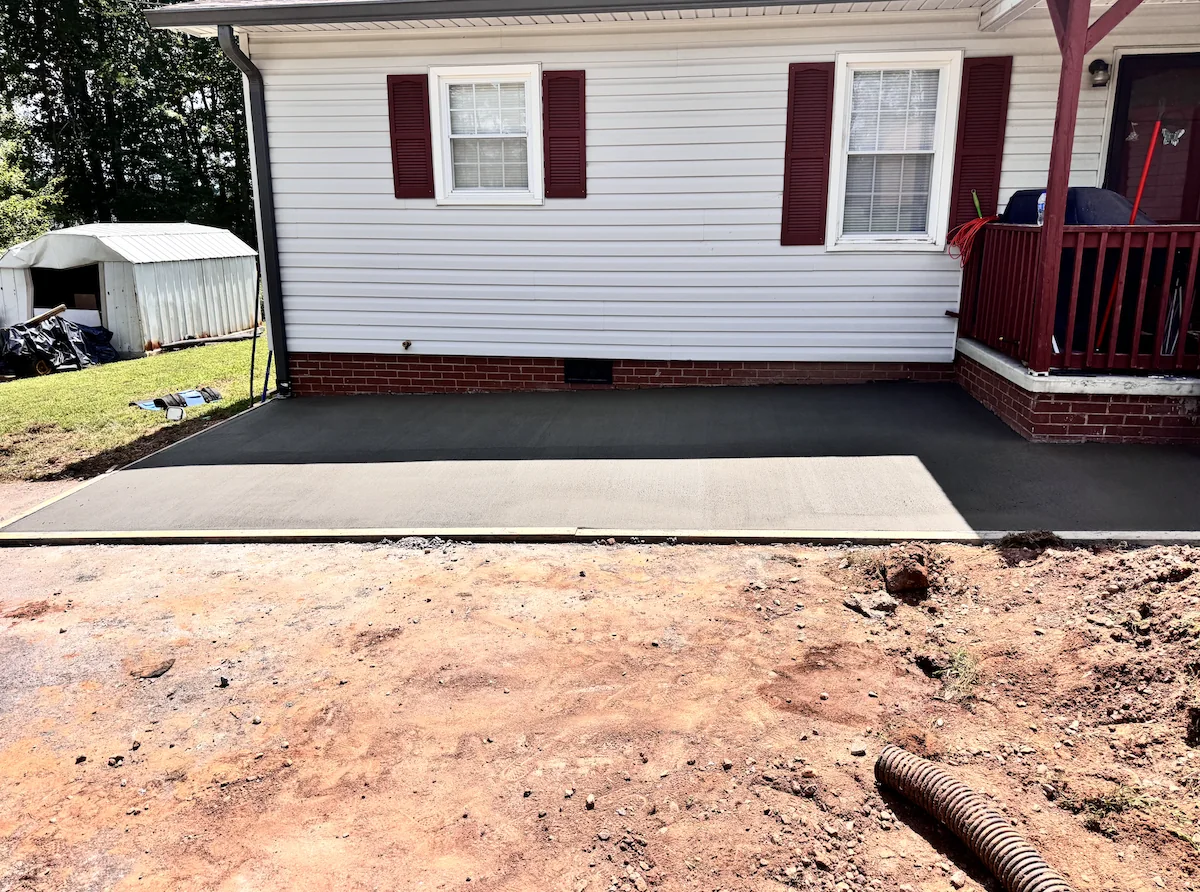
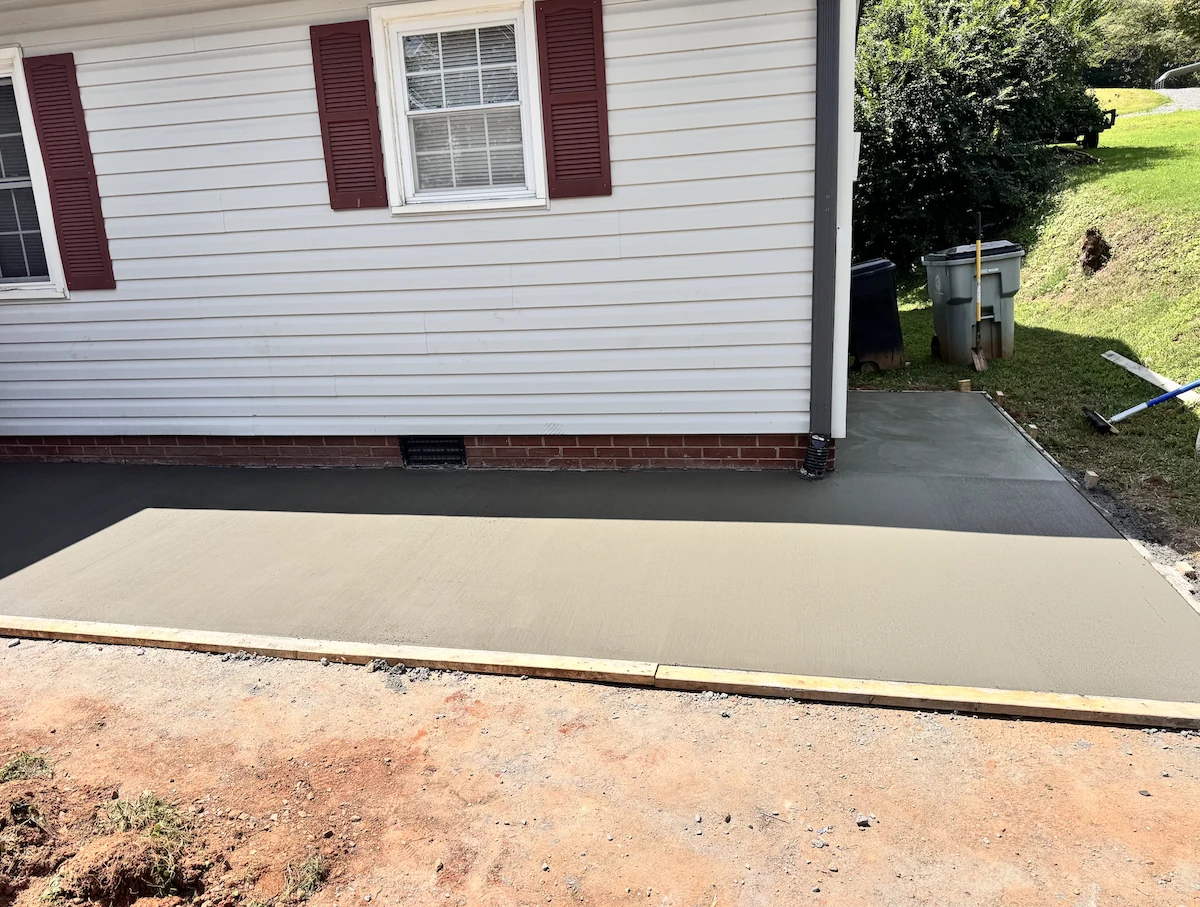
Two stages of the same Foothills driveway pour — the slab curing inside its timber forms, and the broom finish laid off square to the house.
Explore Our Other Concrete Services
Driveway replacement is steady work for us in the older neighborhoods of Conover, Newton, and Long View, where mid-century slabs were poured thin and straight onto clay. See what our Hickory concrete team covers across the region.
We handle every kind of residential and commercial concrete across the Foothills. A few related services: